First, choose the result you actually want
There is a difference between exposing bare timber and giving an existing beam a lighter, natural-looking oak finish. Renaissance Beams uses a hand-applied decorative treatment on suitable existing surfaces. It does not uncover bare wood hidden beneath paint, and it is not a structural repair.
The family process began in 1997 and is now carried on by Back From Black. Our first conversation is about the coating already on your beams, the look you are hoping for and whether this approach is suitable. See how beam lightening differs from stripping for the detailed explanation.
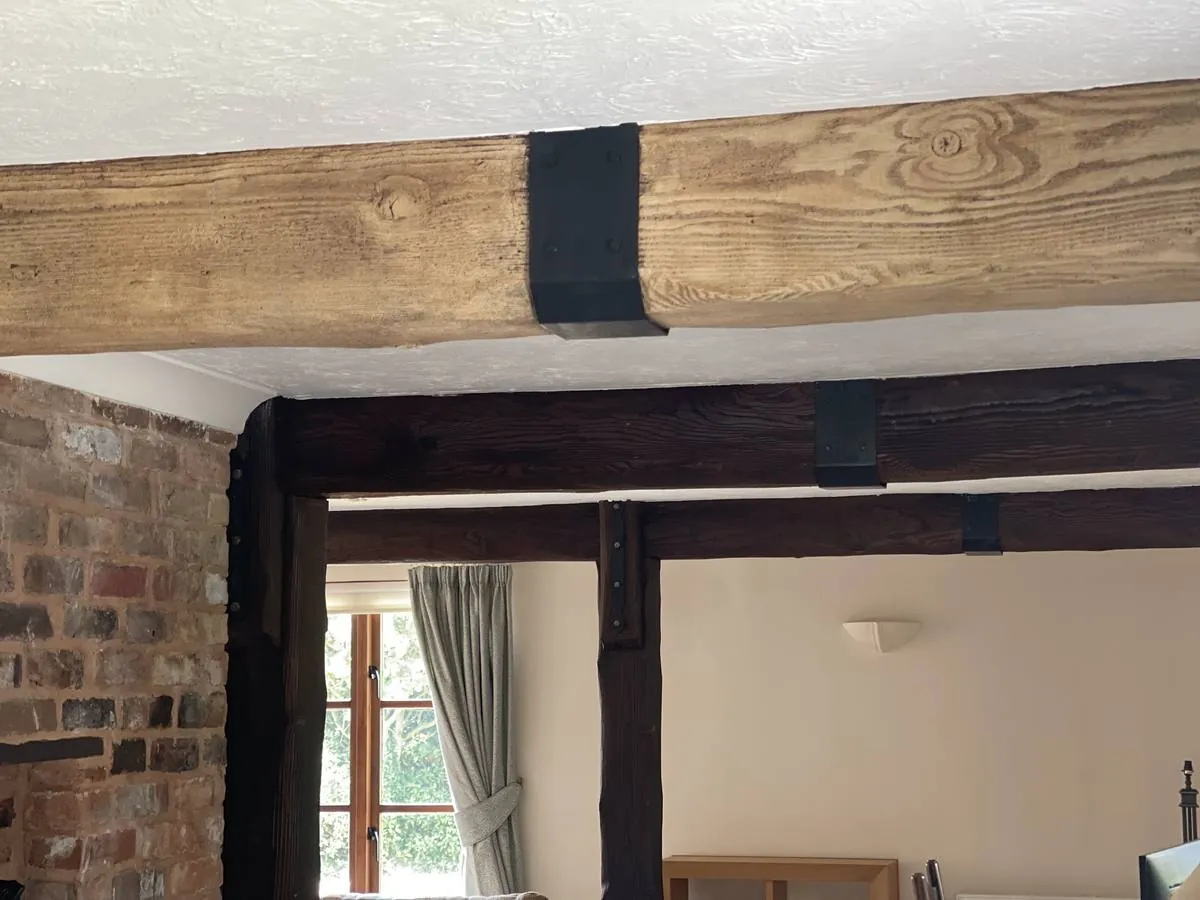
What happens on a suitable surface?
Understand the starting point
Paint, stain, varnish and other coatings need to be identified as far as possible. Please mention wax or chalk paint before making plans.
Agree the scope and appearance
Identify the rooms, posts, beams and other frame elements you want assessed. Photographs and approximate dimensions help us prepare a useful response.
Apply the finish by hand
The decorative finish is built up in water-based layers. Where the surface is suitable, the process does not rely on sanding or sandblasting the timber.
Plan any preparation separately
Wax, unsuitable coatings, difficult access or other issues can change the preparation and quotation. They should not be assumed to be included in a standard room treatment.
The photo pack that makes a first enquiry useful
For each room: send one wide view of the ceiling and surrounding room, one closer view of the beam surface, and a photograph showing any awkward access, high trusses or areas you are concerned about. Daylight is helpful. Label the photographs by room.
Alongside the photographs: include your postcode, approximate room dimensions and ceiling height, the number of rooms, your preferred timing and what you know about the current coating. A product name or photograph of an old tin can be useful when available.
Use the enquiry form first to receive a reference, then use its email link to send your photographs. The form does not upload images. A photo assessment is not a structural survey and cannot identify concealed timber damage.
Three things to raise before booking
Wax and chalk paint. These need specific assessment and may involve separate preparation. Do not start removing an unfamiliar coating just to prepare for an enquiry.
Listed buildings. Suitability and permission are separate questions. Ask the local authority about any consent needed before work. A non-abrasive finish is not automatically exempt. Read our listed-building guidance.
Modern oak frames. A dark or orange-toned exposed frame has different starting conditions from an old painted ceiling. The oak-frame guide explains that part of the work and shows existing project photographs.
What goes into the quotation?
The scope depends on the amount of timber, existing coatings, preparation, height and access. Include posts and braces, not just the ceiling beams. We assess the proposed work before quoting; there is no automatic fixed-price promise for an unseen room.
The quotation guide sets out what affects cost and what to check in the scope. You can also see project photographs and the family history.