What do you want to change?
Black paint, a dark stain or a finish that no longer suits the room can make exposed beams feel visually heavy. The first question is not which machine will strip them fastest. It is whether you want bare timber, or the appearance of lighter, naturally aged oak while retaining the existing surface.
Renaissance Beams is the Sinclair family's original beam renovation practice. Today enquiries are handled by Back From Black, continuing the hand-applied approach. The work is decorative refinishing: it is not structural timber repair and it does not expose hidden bare wood beneath an old coating.
A finish applied by hand, not blasted away
Our approach uses a water-based, multilayered treatment to create a natural-looking oak tone over a suitable existing surface. We assess the coating already on the beam, the appearance you are seeking and the room around it before recommending the work.
The aim is to preserve the beam's visible texture and character while changing its appearance. It is different from sandblasting, sanding or stripping. Where the existing surface is suitable, the application does not rely on abrasive removal. Furnished rooms can therefore be assessed without assuming a whole-house stripping project.
Paint, varnish, wax and chalk paint are not the same starting point
Please tell us what has been applied, even when you are unsure of the product name. Wax can require separate preparation before a new finish can be considered. Chalk paint also needs individual assessment. Neither should be treated as a standard untreated beam in a quotation.
For a modern frame that has become too dark or orange-toned, our oak frame beam restoration page explains that more specific starting point. For historic or listed property, read the listed-building guidance before deciding on a treatment.
What to send for an assessment
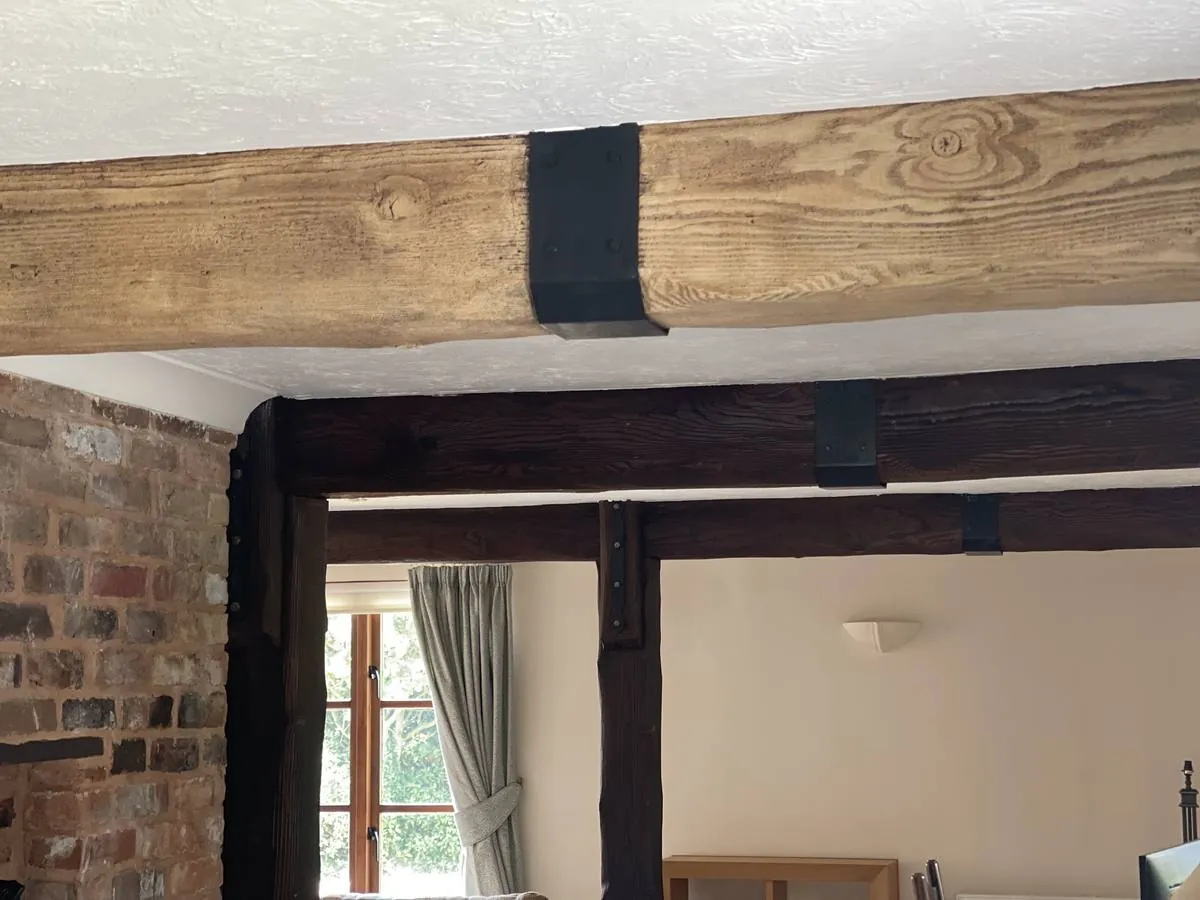
Send a wide photograph of each room, a close view of the beam surface and a view showing the height and access. Add your postcode, approximate room sizes, the number of rooms and anything you know about paint, stain, varnish or wax already present.
Photographs help us decide whether the decorative treatment is a suitable direction. They do not replace a structural survey, identify hidden decay or guarantee a finished colour. The cost guide explains what determines a project quotation.
For further examples of the family method and photographs of completed transformations, visit the Back From Black restoration gallery. Renaissance Beams enquiries are handled by that same team.