Oak frame · Timber frame · Self-build
Dark beams on a new oak frame
Not stripped. Not sanded. Recoloured by hand toward the patina the oak would have reached on its own.
Send photos for a beam checkRenaissance Beams › Oak frame beam restoration
The problem nobody warns you about
You chose the frame. You may not have chosen the colour it ended up.
On most oak frame and timber frame builds the beams are treated before or shortly after the frame goes up — often to a dark stain picked from a small sample, sometimes specified by the frame company as standard, occasionally applied by a decorator who treated it like joinery. It looks deliberate on a 100mm offcut. Across a full vaulted ceiling, with the posts and the trusses all carrying it too, it reads as heavy.
Then it moves. Oiled and oil-finished oak does not sit still: over a few years it warms, then turns, and ends up somewhere oranger than anything you picked. By the time the scaffolding is down and the furniture is in, the usual advice is to live with it or to sand it back. Sanding a whole frame in a finished house means dust in every room, masked windows, lifted carpets and a fortnight of disruption — on a property somebody has usually just spent two years building.
Before you reach for wax or chalk paint
Both are common DIY answers to a frame somebody has stopped liking. Both make putting it right harder, and one of them can end it.
Wax is the one to tell us about first. It has to come off before any colour can be worked into the timber — dewaxing is a separate preparation step, with its own time and its own cost. If your frame has been waxed, or you think it might have been, say so in your first message. It does not rule the job out. It does change what it is.
Chalk paint is the harder one. It has become a common DIY treatment for beams and it is one of the most difficult finishes to undo. It is worse than wax to remove, it adds real time and cost to the preparation, and on some frames it takes the job past the point where it is worth doing at all. If you are thinking about it, speak to us before you start rather than after. If it is already on, say so and send photographs — what can be done depends on how much went on and what was underneath it.
That is the main reason we ask for photographs and for whatever you know about what was put on the timber, rather than quoting from a description.
What the process actually is
It is not a strip and refinish. It is a stain, mixed to your frame and worked on by hand.
Oiled oak does not hold the colour it had on the day it was finished. It drifts — warm at first, then orange, and eventually the tone self-builders tend to call ginger. That drift is the thing people are reacting to when they say the frame looks wrong. It is rarely that the oak is too dark in the abstract; it is that it has gone a colour real aged oak never goes.
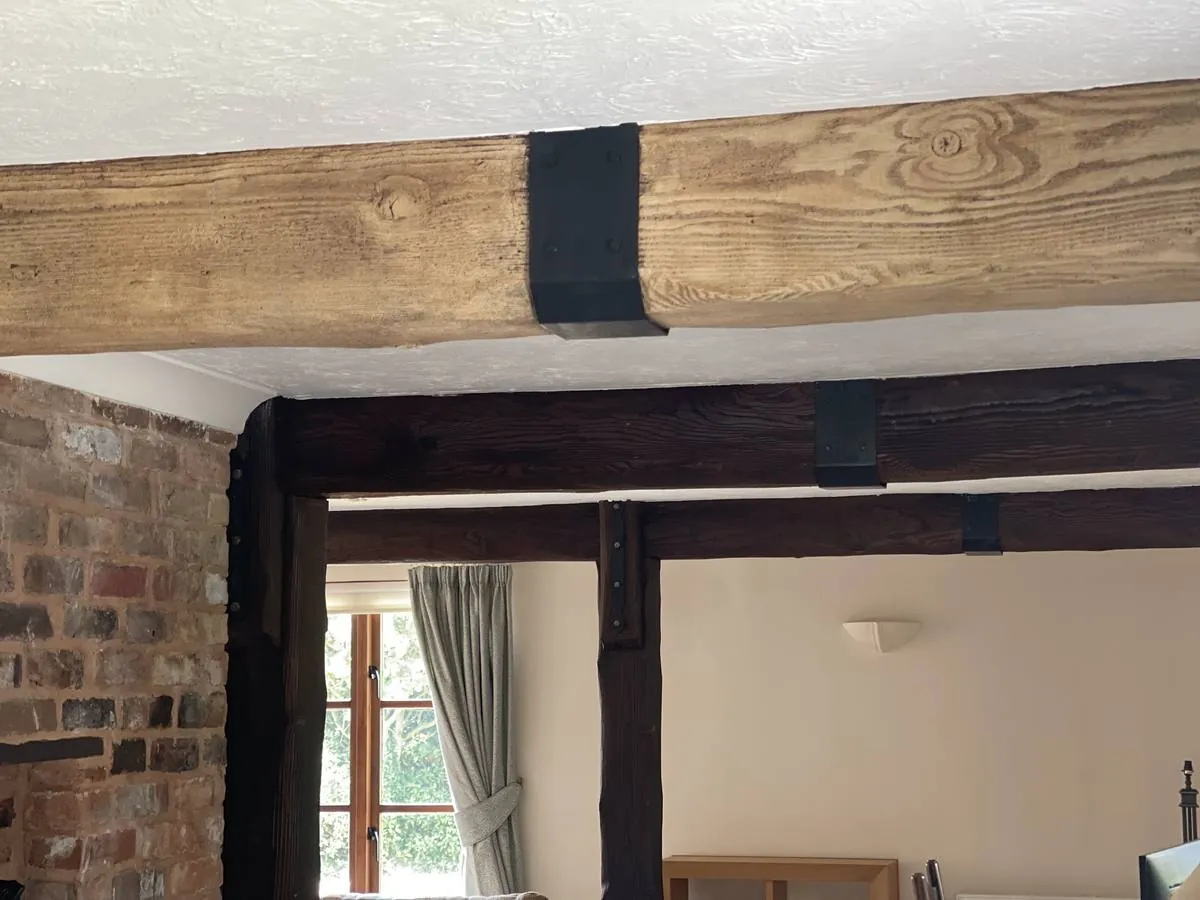
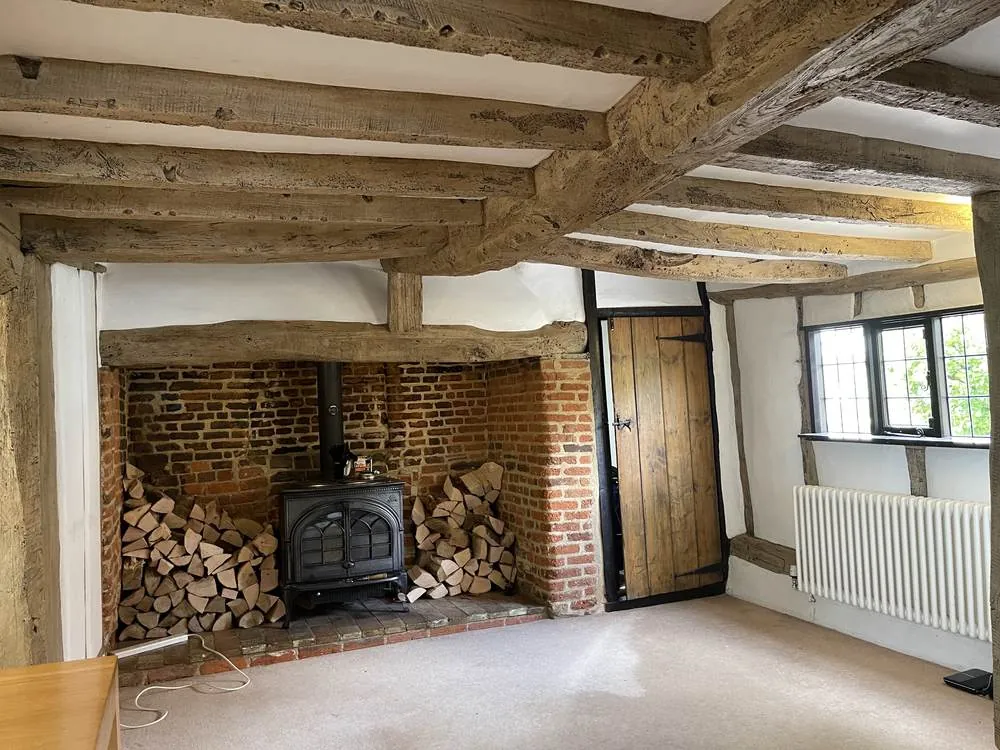
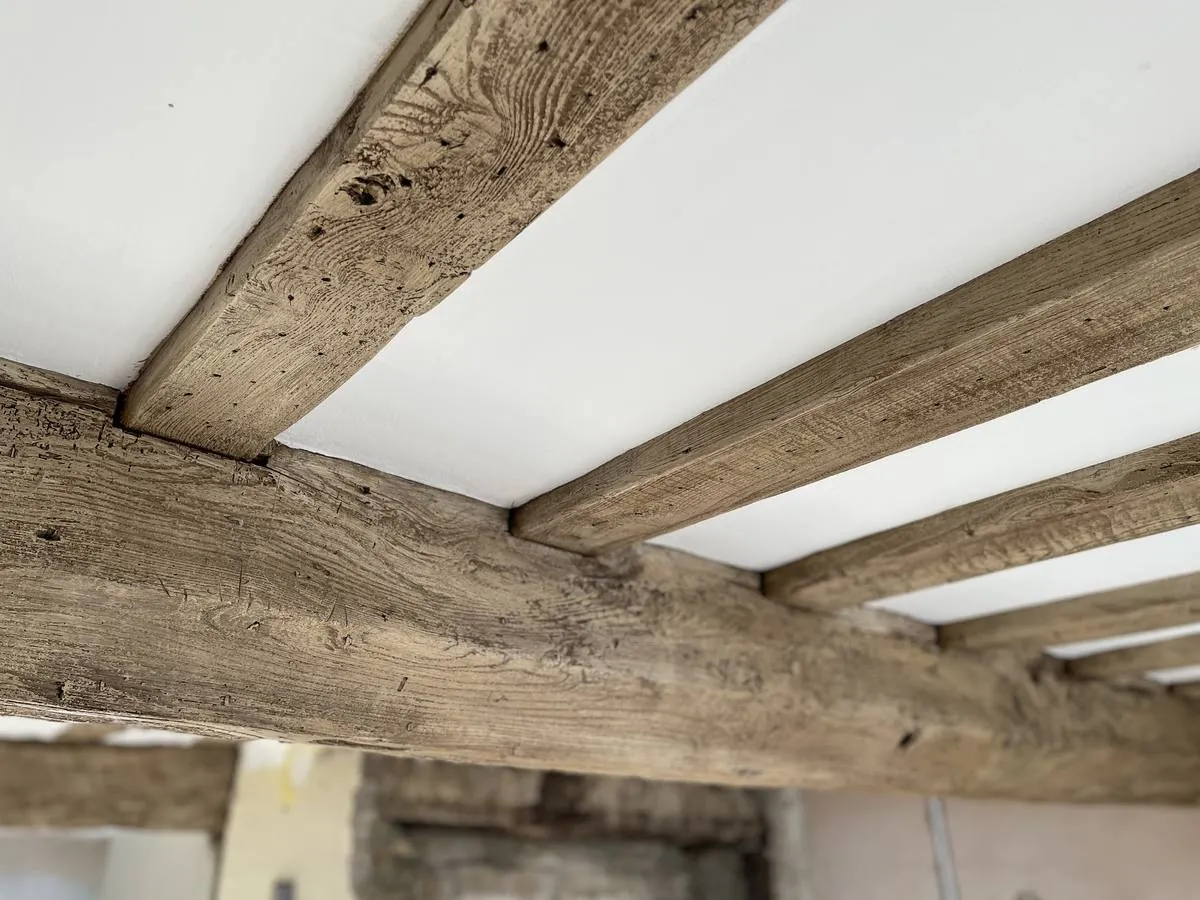
What we do is reverse that. The timber is taken back toward the patina it would have arrived at naturally, by hand, on the frame, in the room. On the Potton frame below, that surface is a modern stained finish — the process works on it, and the photographs are the whole of the evidence we are offering for that.
It is not a colour-change service. The colour is mixed to land where your oak was heading anyway — it is not a shade picked off a chart, and it is not there to make the oak read as a timber it isn't. If what you want is a different colour, this is the wrong process and you should say so early.
How it is done
The same way it has been done since 1997: by hand, water-based, three coats, worked in carpeted and furnished rooms. No sandblasting, no soda blasting, no chemical stripping, no sanding, no dust sheets over the whole house. The frame stays where it is, the plaster between the beams is not touched, and nothing needs redecorating afterwards.
It is slower than blasting. That is the trade-off, and it is the reason the process exists.
A Potton Gransden, Bedfordshire
Frames we are asked about
The Gransden is a Potton design — exposed posts and beams inside and out, which is exactly why the finish on them carries the room. The same question comes up across the sector, and we are asked about these most often:
- Potton
- Oakwrights
- Border Oak
- Welsh Oak Frame
- Carpenter Oak
- Scandia-Hus
- Fleming Homes
- Self-build and one-off frames
We are not affiliated with any of them. They are named here because their owners keep asking the same question, and because the answer depends far more on what was brushed onto the timber than on who cut the frame.
Send photographs
Three or four pictures in daylight, wide and close, plus the finish that was used if you know it — and whether it has ever been waxed. You will get an honest read on where the tone would land and whether it is worth doing.
Thank you — your enquiry has been received.
Your reference is . Keep it with any photographs you send.
The next step is two or three photographs of each room: a wide view, a close detail and the existing finish. Please attach them to your email; this form does not upload photographs.
Email photographs with my reference
We normally reply within one working day. You can also call 01243 979790.
Back to Renaissance Beams — the family practice, the heritage work and the handover, since 1997.